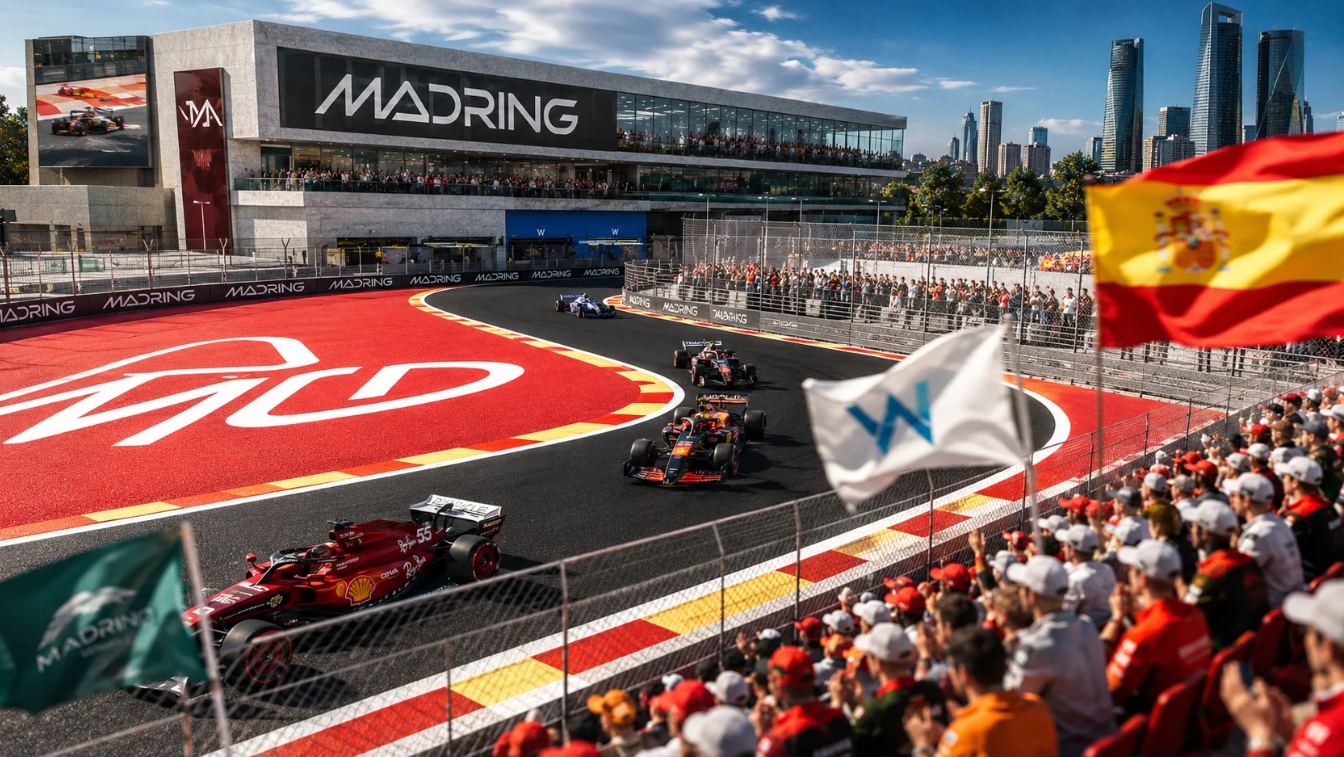
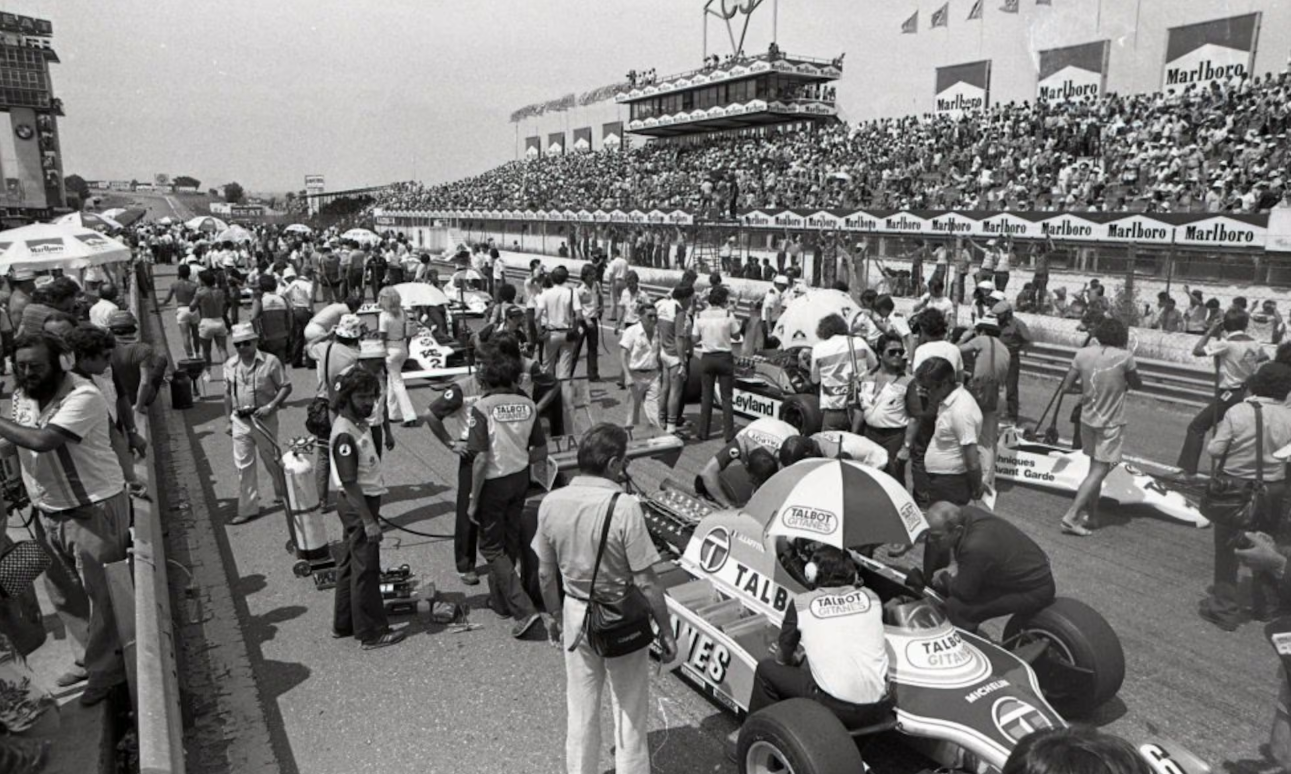
This weekend, Formula 1 races in Madrid for the first time in 45 years. No world championship round has been held in the capital since the 1981 Spanish Grand Prix at Jarama, and never before inside the city itself. On Sunday 13 September, 57 laps of the new Madring circuit will decide the Spanish Grand Prix.
For those of us who develop property in Spain, it is more than a sporting story. Grand Prix weekends are one of the few events that reliably concentrate international capital, media attention and ultra-high-net-worth visitors into a single postcode over three days, and cities that join the calendar tend not to look the same five years later. Monaco, Miami, Austin, Singapore and Jeddah all offer some version of that lesson.
So it is worth asking, with the cars still in the garages: what does this actually change?
The Madring, in numbers
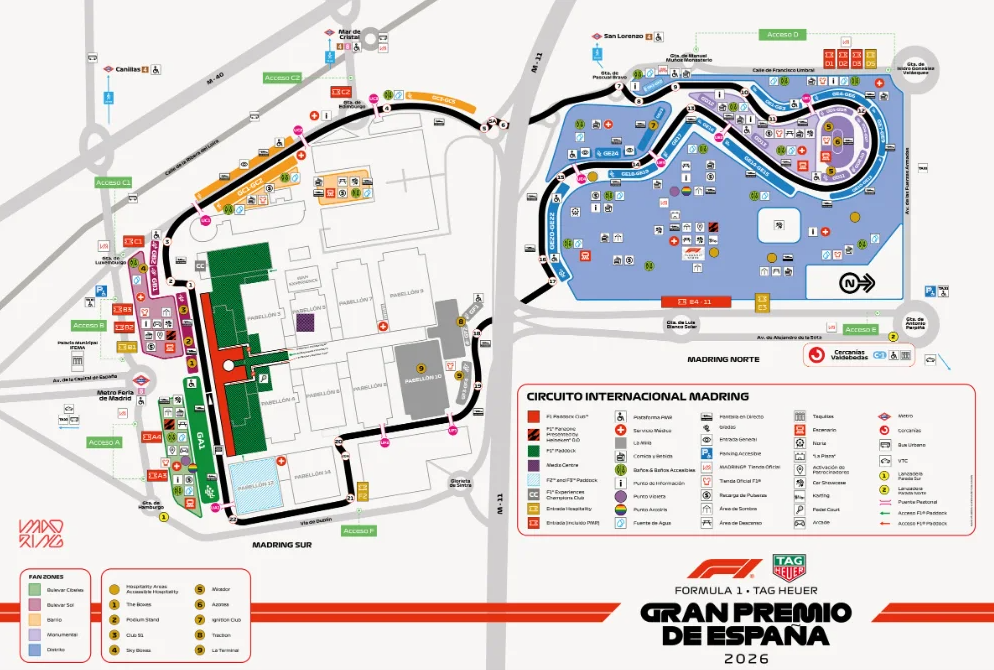
The circuit itself is a serious piece of engineering, not a temporary car-park layout. Designed by Jarno Zaffelli and built around the IFEMA exhibition center in Madrid’s north-east, the Madring is a hybrid of street sections and purpose-built track: 5.416 km, 22 corners, an FIA Grade 1 license and a construction cost of roughly €83 million. Capacity is 110,000 with room to expand towards 140,000, and the layout’s most-discussed feature is the banked Turn 12, a corner teams arrive at with no historical data whatsoever.
Two details matter commercially more than the lap time. The first is access: the circuit sits about five minutes from Adolfo Suárez Madrid-Barajas Airport, one of Europe’s best-connected hubs, with existing metro and rail infrastructure already built for IFEMA’s trade fairs. Very few Grand Prix venues in the world can be reached that quickly from an intercontinental flight.
The second is duration. Madrid’s agreement runs to 2035, with FIA Formula 2 and Formula 3 as support categories. This is not a one-off. It is a decade of a fixed September date that the international luxury calendar can plan around.
What a Grand Prix actually does to a city
The mechanism is not mysterious, and it is not primarily about race-week hotel rates.
A Grand Prix does three things. It creates a hard deadline that forces years of infrastructure spending into a short window; transport, hospitality, public realm. It puts the city in front of a global broadcast audience with an unusually wealthy profile. And it creates an annual reason for a very specific group of people to be physically present, which is how second-home markets are actually built: not through advertising, but through repeated visits.
The property effect follows from the third point. Someone who comes for a weekend once has an experience. Someone who comes every September for ten years starts doing the mental arithmetic on hotel bills versus owning something. That pattern repeats in every established motorsport city, and it unfolds over years rather than weeks.
Why this matters beyond Madrid
Spain’s luxury market has spent the last decade proving something to international buyers: that it offers the security, quality of life and legal stability that make a large purchase defensible. What it has sometimes lacked, compared with Monaco or the Côte d’Azur, is a global event calendar that keeps a market permanently in view.
The Madring closes part of that gap. Spain now has a permanent, decade-long fixture on the world’s most-watched annual luxury sporting circuit, in a capital that is simultaneously attracting corporate headquarters, wealth managers and family offices.
Importantly, it complements rather than replaces what already exists. Barcelona hosted the Spanish Grand Prix from 1991 and remains a major motorsport venue; Jerez and Montmeló continue to anchor Spain’s racing infrastructure. Adding a capital-city street race gives the country something structurally different: an event where the paddock, hospitality, and business conversations all happen inside a major financial city.
The Costa del Sol connection
Here is where it becomes directly relevant to what we do.
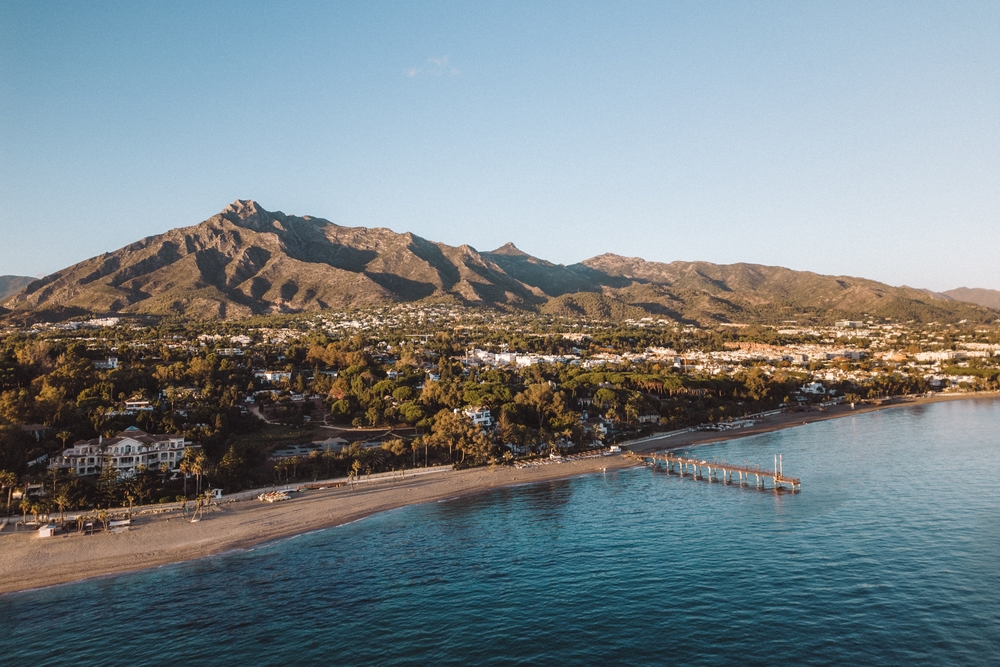
Madrid and Marbella are not competitors in the luxury property market. They are complements, and the flow between them is well established largely because the journey is genuinely short.
The direct AVE high-speed service runs from Madrid Atocha to Málaga María Zambrano in around two hours and forty minutes, city center to city center, with no airport, no security queue, and no transfer. From Málaga station, it is roughly forty minutes by car to Marbella’s Golden Mile. In other words, a buyer can leave the paddock on Sunday evening and be standing on a terrace above the Mediterranean on Monday morning, having spent less time traveling than most people spend commuting in a week. The flight is under an hour if you prefer it, but for this route the train is usually the faster door-to-door option.
That connectivity is why a very large share of Spain’s domestic prime buyers are Madrid-based, and why a very large share of Madrid’s international visitors extend their trip south.
Race weekend falls in the second week of September, the point in the calendar when the Costa del Sol is arguably at its best, and when a meaningful number of visitors arriving for three days of racing will look at the map and add a few more. For a market that runs on personal presence and word of mouth, that timing is close to ideal.
The broader point is about buyer profile. The person who flies in for a Grand Prix, stays in the best hotel available, and cares about how a weekend is executed is the same person who buys a branded residence. They buy on the same instincts: engineering they will never inspect, materials they will touch daily, and an experience that either feels complete or doesn’t.
Same discipline, different product
Motorsport and high-end residential development keep ending up in the same conversation for a reason. Both are exercises in tolerances.
An F1 car is the product of thousands of decisions in which a few millimeters change the outcome. Nothing on it is decorative. Everything on it exists because it was measured, tested and kept. That is also, in a much slower way, how a serious building gets made: the specification written at concept stage either survives into the finished product or quietly erodes at every handover between designer, contractor and installer.
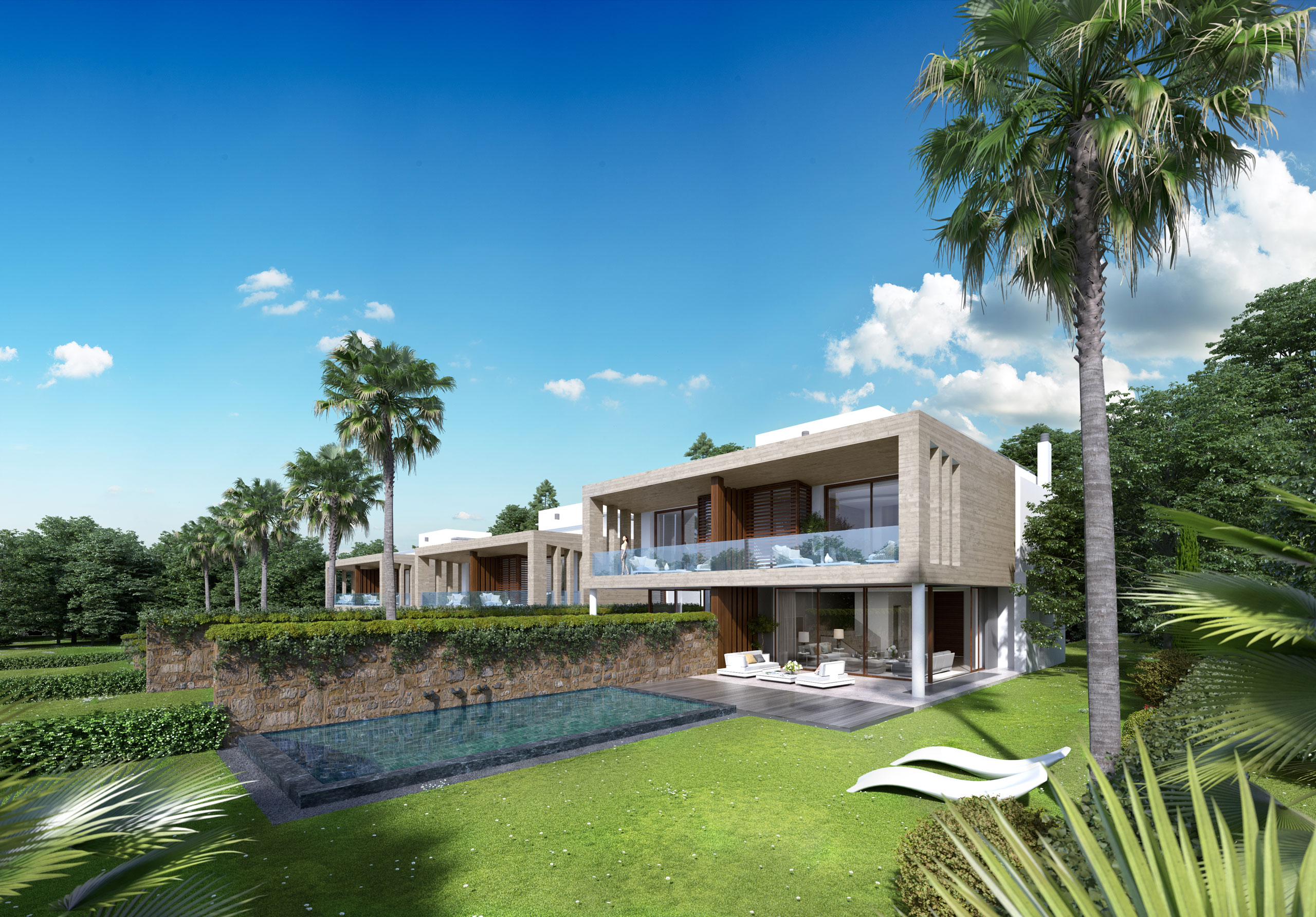
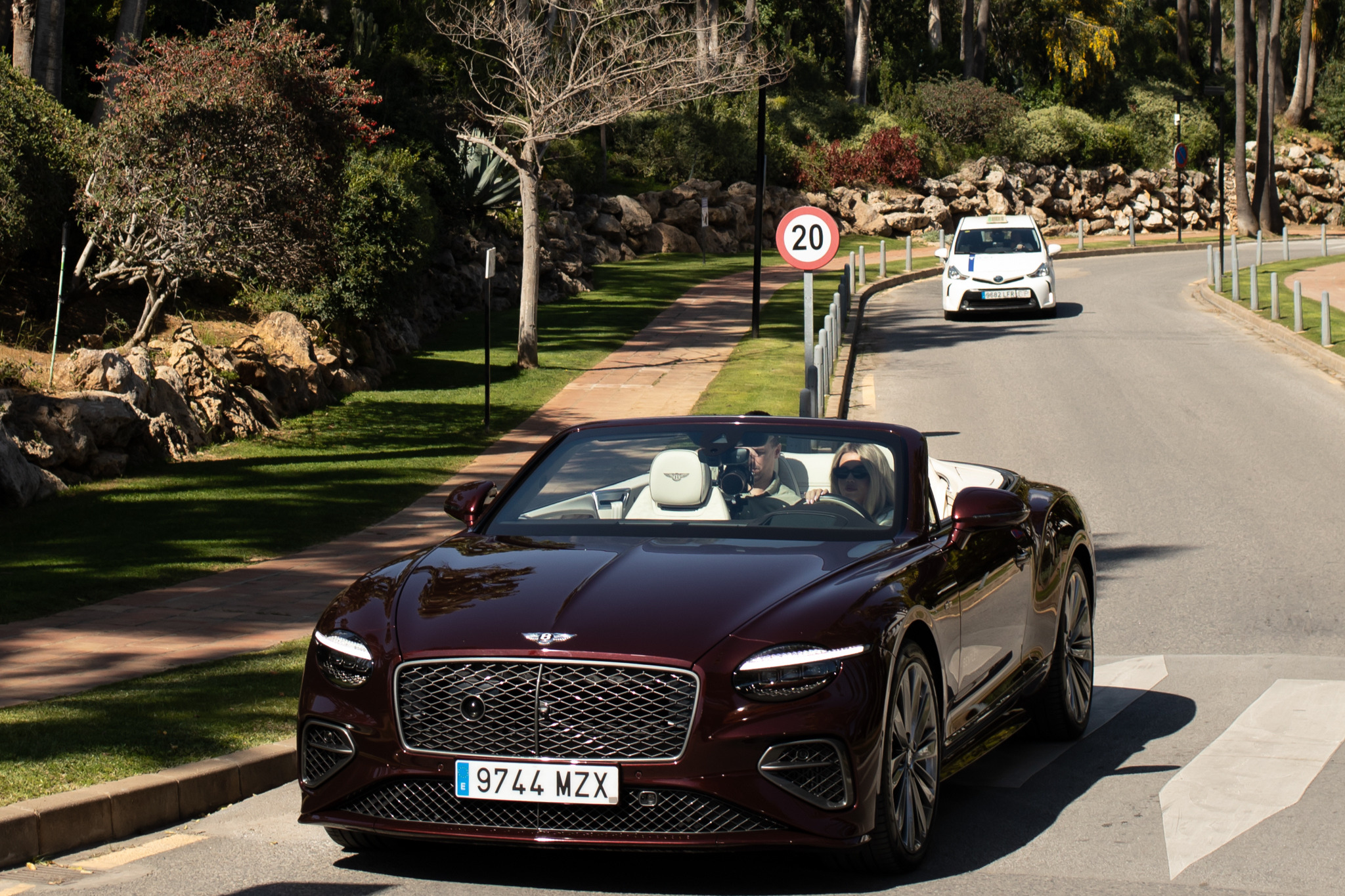
It is why we run the entire development cycle in-house-land, capital, architecture, licensing, construction and commercialization, and why our partnerships are with brands that come from exactly this culture. AÍDA, furnished by Bentley Home, our collection of eight duplex residences on Marbella’s Golden Mile beside Puente Romano, carries the name of a marque that has spent a century being judged on tolerances rather than adjectives. The interiors are handcrafted in Italy through Luxury Living Group; the architecture was designed to hold them from the first drawing.
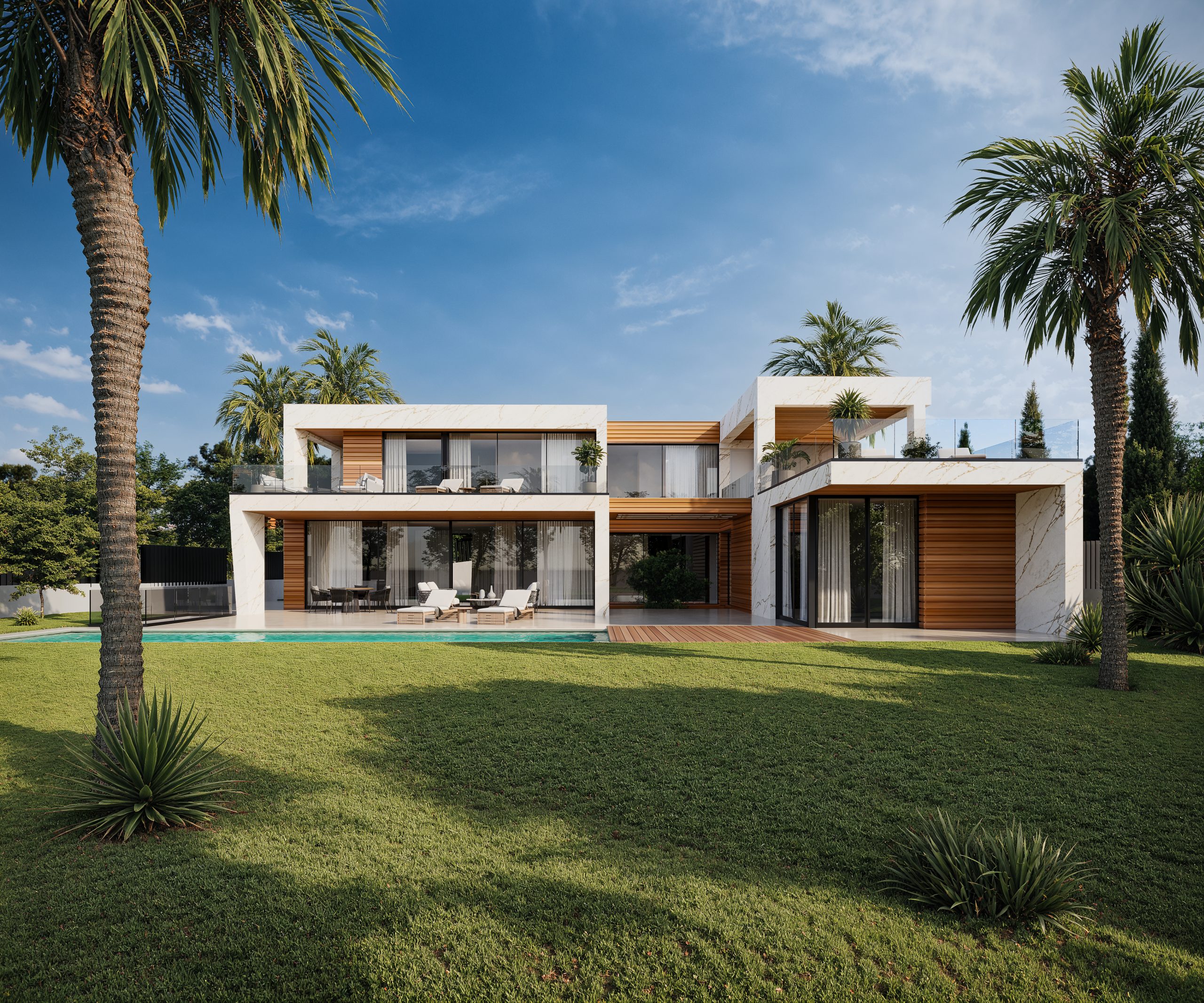
Elsewhere, the same discipline produces a different result. Ocho de Oro, eight villas with interior design by Versace Home in Nueva Andalucía, is far bolder in its material language: stronger decorative detail, richer contrast, larger entertainment and wellness spaces, different products, one method, which is precisely what a racing team would recognize.
What we are watching after Sunday
Three things, over the next few seasons rather than the next few days.
Whether the September date holds its shape: a fixed, decade-long fixture in the calendar turns an event into a habit, and habits move property markets.
How much of the hospitality build-out is permanent. Temporary infrastructure disappears. Hotels, restaurants and transport capacity do not, and they are what a city keeps.
Whether the visitor flow extends south, this is the measurable one for the Costa del Sol, and September 2027 will tell us more than September 2026 can.
None of this is a reason to buy anything this weekend. It is a reason to understand that Spain’s position in the global luxury market is still being built — and that events like this are part of the scaffolding.
FAQ: the 2026 Madrid Grand Prix
When is it? Race weekend runs 11–13 September 2026, with the Grand Prix on Sunday 13 September at 15:00 local time over 57 laps.
Where is the circuit? The circuit is in Madrid, a hybrid street and purpose-built circuit around the IFEMA exhibition center in north-east Madrid, roughly five minutes from Barajas Airport.
How long is the deal? Madrid is contracted to host Formula 1 from 2026 to 2035, with F2 and F3 as support races.
Can I combine the race with a trip to Marbella? Easily. The direct AVE from Madrid Atocha reaches Málaga in about two hours and forty minutes, and Marbella is roughly forty minutes by car from there.
Was there ever F1 in Madrid before? Yes, the last world championship race in the Madrid region was the 1981 Spanish Grand Prix at Jarama. This is the first time it’s been held inside the city itself.
Talk to us
If you are traveling to Spain for the Grand Prix and want to see what the top of the Marbella market looks like, we can arrange it. Our team is based on Avenida Ricardo Soriano in central Marbella, two hours and forty minutes from Madrid on the direct AVE, plus a short drive from Málaga station.
Request a brochure or arrange a private viewing of AÍDA by Bentley Home — get in touch.